

Communications and Language Degrees
What Are Communications and Language Degrees?
Communications and language degrees teach students how people create, interpret and share information across conversations, writing, media, workplaces and classrooms. Offered at the bachelor’s and graduate levels, these programs are well-suited for students interested in public relations, marketing, media, writing, education, leadership or organizational communication.
Coursework may include digital media, storytelling, interpersonal communication, language learning and instruction. You can build practical skills in writing, speaking, listening, critical thinking and cross-cultural communication. These degrees are a strong choice for today’s college students because clear, adaptable communication is valuable across industries and increasingly important in global, digital and AI-supported workplaces.

10% Off Tuition Scholarship
GCU is offering a 10% off tuition scholarship for new online(See disclaimer )College of Humanities master’s degree or graduate certificate students who qualify.(See disclaimer ¢)
Explore Communications and Language Degree Programs by Area of Study
Communications and language programs cover a range of subjects, including media, writing, marketing, broadcasting, language instruction and communication education. Explore the areas below to compare program focus, degree level and learning format, and to identify options that align with your interests, strengths and career goals.

A communications studies degree explores the development, transmission and interpretation of messages. You can examine how meaning is produced and interpreted in interpersonal, small group and mass communication settings. Communications studies also consider intercultural communication best practices, as well as communication within organizations.

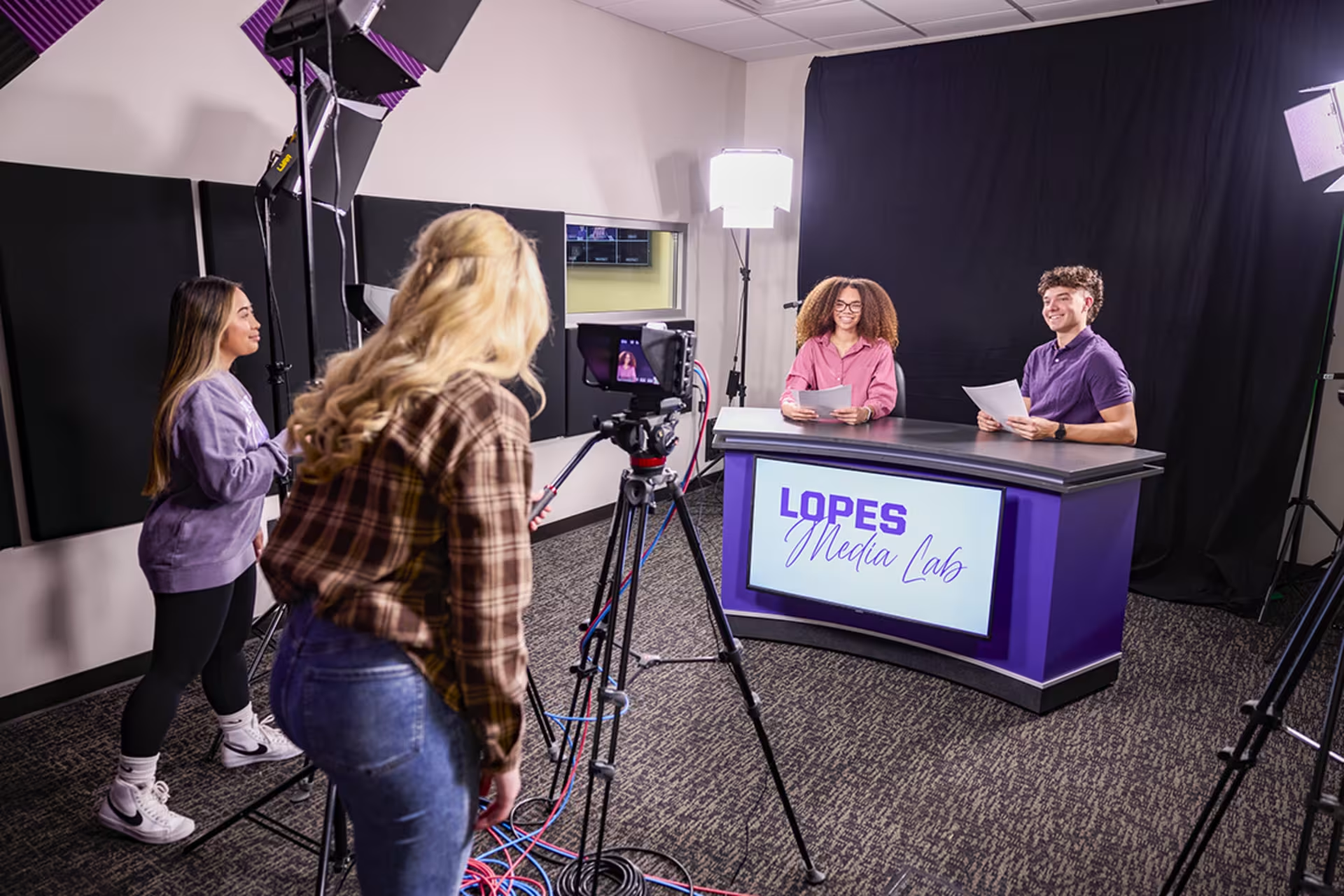
Media and broadcasting is a niche within the communications field that focuses on mass communication. You will examine how to create and deliver content across mass media platforms, including television, radio, podcasts and digital streaming outlets. This interdisciplinary subfield teaches both technical skills in audiovisual production and content creation skills.

Students who are passionate about writing and communication may wish to explore English and professional writing degree programs. Choose from programs that focus on writing for new media or English studies that can provide a pathway to a teaching career. Writing and English degrees explore journalism, public relations, creative writing and more.

Sharpen your communication skills in preparation for pursuing a career in marketing, sales or fundraising. Explore strategic communication competencies through the lens of supporting business operations and revenue growth. Choose from degrees that focus on marketing and advertising, applied marketing and advertising or professional sales and marketing.

If you aspire to share your passion for literacy and language with future generations, you can choose from education degree options that may lead to initial teacher licensure. Pursue a career teaching English to elementary or secondary school students. Current teachers can explore graduate degree options for advancing their pedagogical knowledge.

Support and empower individuals who are learning the English language as an English as a Second Language (ESL) instructor. A Teaching English to Speakers of Other Languages (TESOL) degree examines the fundamentals of linguistics, as well as language acquisition theories. You will consider how to design a culturally responsive curriculum and support brain-based learning. GCU’s TESOL program does not lead to initial teacher licensure and is designed for educators and other professionals seeking to develop specialized skills for teaching English to speakers of other languages.
Communications and Language Degree by Education Level
Bachelor's Degrees
A bachelor’s degree provides foundational study in communication or language-related subjects. Coursework may examine writing, public speaking, media, research, ethics and communication across cultures or organizations.
These programs are generally designed for students beginning or completing their undergraduate education. They may help you prepare for early-career opportunities or establish an academic foundation for future graduate study.

Master's Degrees
A master’s degree offers advanced study in a focused area such as communication education, organizational leadership, marketing, research or language instruction. Courses may emphasize the application of communication theories, instructional practices and analytical methods.
This degree level may suit you if you want to deepen your existing knowledge or transition into a communication-related field. Program requirements and intended career pathways vary, so review the curriculum carefully before enrolling.

Doctoral Degrees
A doctoral degree is the highest academic credential and typically emphasizes advanced research, theory and applied leadership. Depending on the program, you may study how research and data can inform communication strategies, organizational decisions or marketing initiatives.
Doctoral students are generally expected to evaluate existing scholarship and conduct original research. These programs may be relevant to goals involving research, consulting, postsecondary teaching or senior leadership, although additional qualifications may be required for specific roles.

Graduate Certificates
A graduate certificate provides focused study in a specialized subject without requiring completion of a full graduate degree. Certificate options may address areas such as language instruction, communications, leadership or teacher development.
A certificate may help you expand a particular skill set or supplement previous education. Admission requirements, course credits and professional applications differ by program.

Explore All Communications and Language Degrees at GCU
30 Matching Degrees





How To Choose the Right Communications or Language Degree
Choose a degree by matching its curriculum and learning outcomes to your career goals, interests and preferred work environment. Start by asking which activities you most want to pursue. For example:
What Can You Do With a Communications or Language Degree?
A communications or language degree may support career paths in writing, media, public relations, marketing, education and organizational communication.(See disclaimer 1) The opportunities available to you will depend on your degree, experience, portfolio, location and any licensing or certification requirements. Explore communication career options.
Some careers you may pursue after earning a degree in language or communications include:
Editor
Oversee content assignments and review and edit writing in preparation for publication
Marketing manager
Plan and oversee marketing campaigns and analyze the performance of the campaign to make adjustments
Public relations specialist
Curate the public image of an individual or organization by serving as a media liaison and providing crisis management
Journalist
Investigate current events, interview involved parties, fact-check information and publish stories to keep the public informed
Fundraising manager
Develop, coordinate and oversee fundraising campaign projects intended to fund organizational or community projects
Teacher
Build a teaching career helping students strengthen language, literacy, reading comprehension, and written and verbal communication skills
Median annual wage for media and communications workers as of May 2025(See disclaimer 2)
Estimated number of job openings for media and communications workers annually from 2025 to 2035(See disclaimer 3)
Online and On-Campus Degree Programs
Communications and language degrees may be offered online or on campus, depending on the program. Online study can provide greater scheduling and location flexibility, while on-campus learning offers face-to-face instruction and access to campus services and activities. Some programs may include scheduled sessions, field experiences or other in-person requirements, so review the individual degree page for format details.

Frequently Asked Questions About Communications and Language Degrees
Explore frequently asked questions about language and communications degrees to discover the path that fits you best.
What skills can you develop in communications and language degrees?
Can you work in marketing with a communications degree?
What can you do with a teaching English as a second language (TESOL) degree?
What is the difference between journalism and public relations?
What is the difference between a communications degree and a marketing degree?
Can you earn a communications degree online?
What To Expect From a Communications or Language Degree Program
You can expect coursework that combines communication concepts with opportunities to apply what you learn through writing, presentations, research, discussions or projects. The specific experience will depend on your degree level and area of study.
Online students generally access coursework, learning materials and class discussions through a digital platform. On-campus students attend classes in person and can take part in campus activities and services in Phoenix.
GCU is institutionally accredited by the Higher Learning Commission. Certain programs may also hold specialized accreditation or approvals. Because accreditation varies by program, review the university’s accreditation page and the details for your selected degree.
Communications and Language Degree Tuition and Savings
Compare program options, learning formats and potential financial resources with help from a university counselor.
Discover Your Financial Options
Explore Your Financial Options
Ways To Save
Your education is an important financial investment, and there are several ways to help manage costs while earning your degree. GCU’s university counselors are available to help you explore available options and provide personalized guidance on your estimated cost of attendance.
Complete the Free Application for Federal Student Aid (FAFSA) annually to determine eligibility for federal grants and student loans. Since some aid is awarded on a first‑come, first‑served basis, GCU recommends submitting the FAFSA as early as possible after Oct. 1 to maximize funding opportunities.
If you’ve earned college credits from another institution, you may be able to complete your degree sooner at GCU by transferring those credits. Submit the Lopes Unofficial Credit Evaluation form, then connect with a university counselor who can provide you with personalized guidance.
You may be able to reduce your college costs by applying for GCU’s on-campus or online student scholarships. We invite you to explore available institutional scholarships and determine which opportunities you may be eligible for. GCU also encourages students to seek out third‑party scholarships and grants.
What Are the Admission Requirements for Communications and Language Degrees?
Admission requirements depend on the degree level, program, learning format and your previous academic experience.
Undergraduate admission may be based on factors such as your high school GPA, previous college coursework or qualifying test scores. Graduate and doctoral programs have separate academic and program-specific requirements. Certain degrees may also require professional experience, prerequisite courses, licensure documentation or access to an approved educational setting.
GCU does not charge an application fee. Because requirements may change or differ by program, review the current admission criteria before applying. A university counselor can help you identify the documents and requirements that apply to your situation.

You can apply to a degree program at GCU in just three simple steps. Your university counselor is standing by to assist you with any questions about the application process.
It starts with selecting the program that aligns with your goals from one of GCU's 380+ academic programs — from undergraduate degrees to post-master’s certificate programs to doctoral degrees.
Pick your program
Explore our on-campus, online or evening cohort options under the Degree Programs page to find the right program for you.
Complete our online application
Your university counselor will direct you to the online application. Fill in all required information and submit the form.
Submit supporting documents
Submit your official transcripts and any relevant test scores, and confirm with your university counselor that all forms for your desired program are submitted.




Explore communications and language degree programs at GCU, compare your options and take the next step toward your career goals.
If you are seeking licensure/certification, please refer to the "Accreditation and Compliance/State Disclosures” link for the specific program of interest’s website for your location and/or employment state’s licensure requirements, per 34 CFR 668.14(b)32 and 668.43(c).
- Coursera. (2026, July 1). What Can You Do with a Communications Degree? 10 Jobs. Retrieved July 2026.
- The earnings referenced were reported by the U.S. Bureau of Labor Statistics (BLS), Media and Communications Workers as of May 2025, retrieved September 2026. BLS calculates the median using salaries of workers nationwide with varying levels of education and experience. It does not reflect the earnings of GCU graduates as media and communications workers, nor does it reflect the earnings of workers in one city or region of the country or a typical entry-level salary. Median income is the statistical midpoint for the range of salaries in a specific occupation. It is very unlikely that a median salary will reflect an entry-level salary. It represents what you would earn if you were paid more money than half the workers in an occupation, and less than half the workers in an occupation. It may give you a basis to estimate what you might earn at some point if you enter this career. Grand Canyon University can make no guarantees on individual graduates’ salaries. Your employability will be determined by numerous factors over which GCU has no control, such as the employer the graduate chooses to apply to, the graduate’s experience level, individual characteristics, skills, etc. against a pool of candidates.
- Data shown is effective August 2026, which can be found here: U.S. Bureau of Labor Statistics, Occupational Outlook Handbook, Media and Communications Workers, retrieved September 2026.
Approved and verified accurate by the Associate Vice President of GCU Marketing on Sept. 3, 2026.